

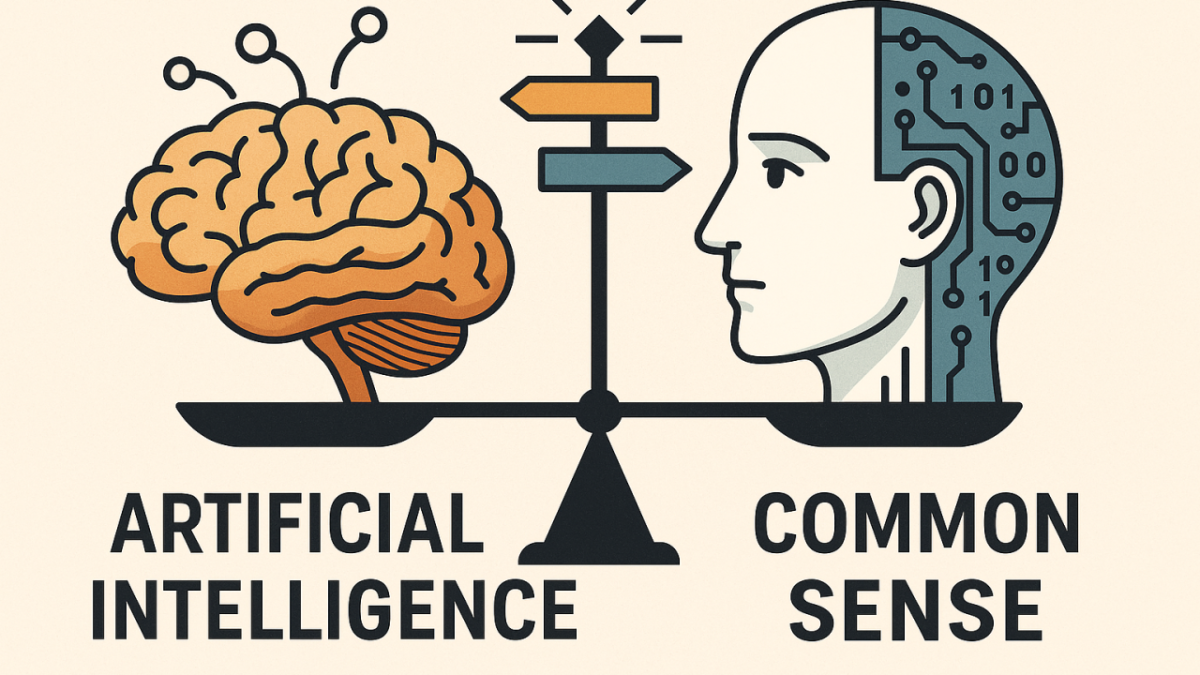
In today’s society, it has become increasingly difficult to distinguish intelligence from common sense because the two often intertwine like a tightly knotted rope. Many people view intelligence as a person’s ability to learn, understand, and apply knowledge, while common sense is the ability to make practical and reasonable decisions in everyday life. Although they are connected, they are not the same. A person may be highly intelligent academically but still lack good judgment in real-life situations, while another person may not excel academically yet possess strong practical understanding and awareness.
For the average person, intelligence is influenced by several factors such as nutrition, genetics, parental support, and early childhood development. Research has shown that the first few years of a child’s life, especially from ages 0–4, are extremely important for brain development because children absorb information rapidly through interaction and stimulation. Environmental factors during childhood, such as the quality of education, family stability, and social surroundings, also play major roles in shaping intellect. As children grow older, their education throughout middle school, high school, and college can further strengthen their intelligence and critical thinking skills.
Common sense, on the other hand, is often developed through everyday experiences and social interactions. It is shaped by observing others, learning from mistakes, understanding consequences, and adapting to different situations. People gain common sense from interacting with individuals of different ages, cultures, and backgrounds, as well as from lessons taught by parents, teachers, and communities. However, in recent generations, a new and powerful factor has greatly influenced both intelligence and common sense: social media and the internet.
Over the past three generations Millennials, Generation Z, and Generation Alpha. Social media has had a noticeable impact on the way people think, communicate, and process information. As technology advanced and became more accessible, countless applications, websites, and social platforms were created for entertainment, communication, education, and business. Billions of people now interact daily through text messages, videos, posts, images, and other forms of online communication. While the internet has provided many benefits, such as easier access to information and global communication, it has also contributed to serious problems, including the rapid spread of misinformation and shortened attention spans.
According to research from organizations such as the Pew Research Center, misinformation online has become a growing concern because false or misleading content spreads quickly across social media platforms. Many people consume information without verifying whether it is accurate, which can negatively affect critical thinking and decision-making skills. In addition, excessive use of social media has been linked to distractions in education, lower attention spans, and reduced face-to-face communication skills among younger generations.
The COVID-19 pandemic further intensified these issues. During the pandemic, millions of students worldwide relied heavily on virtual learning and technology for education. Although online learning allowed education to continue, many students struggled academically and socially due to limited interaction, distractions at home, and overreliance on digital devices. Studies conducted after the pandemic showed declines in academic performance in subjects such as mathematics and reading in several countries. This period also highlighted how technology, while useful, can negatively affect both intellectual growth and practical social development when not used properly.
In my opinion, society needs to move forward by taking a step back in certain areas. Technology should not completely replace human interaction, critical thinking, or real-world experiences, especially during a child’s developmental years. Instead, technology should be used in smarter and more balanced ways that support learning without creating dependency. Parents, schools, and communities should encourage children to spend more time engaging in real-life activities, social interaction, reading, and problem-solving outside of screens. By finding a healthier balance between technology and human development, future generations may improve both their intelligence and their common sense.